
Scars
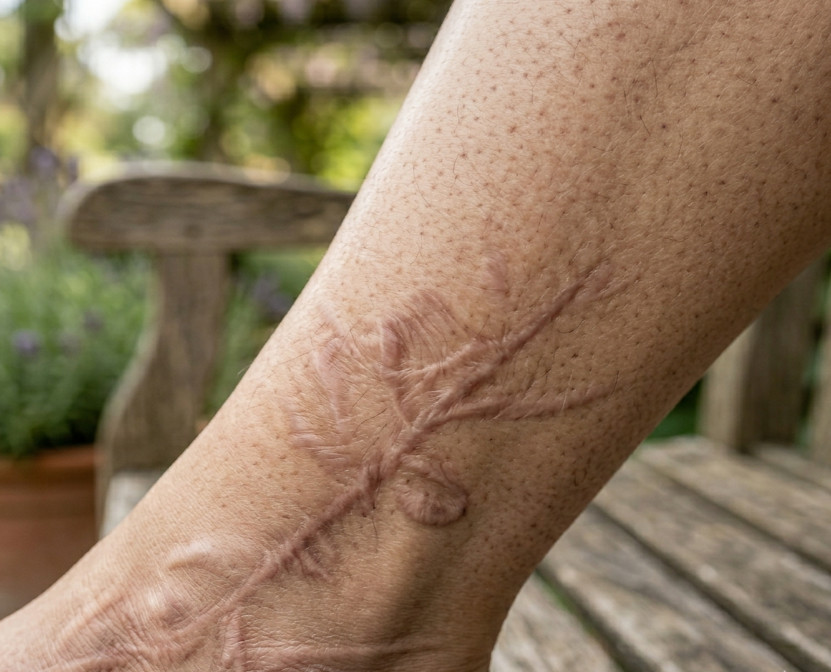
Skin repair is a complex, multi-stage process governed by the final phase of the healing cascade: Remodeling. During this dynamic physiological process, the body reorganizes collagen to restore structural integrity; however, because healed tissue never fully regains the 100% tensile strength of original skin, the clinical objective is to cultivate a mature scar that is both functionally robust and aesthetically harmonious.
The timeline for this recovery varies significantly by depth:
Superficial injuries typically heal within 3–7 days.
Deeper injuries require 1–3 weeks for initial closure.
Full maturation can take anywhere from 1 to 2 years.
This pace is further influenced by the natural regeneration of the epidermis, which occurs every 28–30 days in healthy adults but can slow to up to 84 days in older populations. Critically, reaching the "mature scar" stage does not mark the end of therapeutic possibilities. While a mature scar cannot be removed entirely, modern medical options—including laser therapy, steroid injections, silicone treatments, and surgical revision—can significantly improve appearance, texture, and flexibility by remodeling collagen and reducing discoloration.
The determinants of scar quality are influenced by a complex interplay of clinical factors:
Initial Etiology: The nature of the injury (traumatic vs. surgical, contaminated vs. clean) and the precision of the primary management.
Mechanical Forces: Tensile strength is dictated by skin elasticity, collagen density, and alignment with Langer’s Lines (anatomical tension lines).
Morphological Characteristics: Factors such as depth, orientation, and whether the scar traverses an anatomical landmark, which can increase visibility and functional impairment.
Pathological outcomes can result in suboptimal outcomes, including hypertrophic scarring, keloids, or contractures. These not only affect the patient's self-esteem but can also lead to significant functional limitations if left unaddressed.
Our restorative solution involves scar revision and refinement. At Halo Wound & Restorative Clinic, we offer a comprehensive suite of advanced techniques to repair, reconstruct, and camouflage matured scars:
Surgical Revision: Utilizing Z-plasties and local tissue flaps to redirect tension and improve the functional orientation of the scar.
Pharmacological Intervention: Targeted intralesional steroid injections to flatten raised scars and mitigate pruritus (itching).
Aesthetic Modulation: Advanced management of post-inflammatory hyperpigmentation and discoloration to ensure a seamless color match with the surrounding skin.
Functional Reconstruction: Releasing contractures to restore range of motion and anatomical symmetry.