
Acute wounds
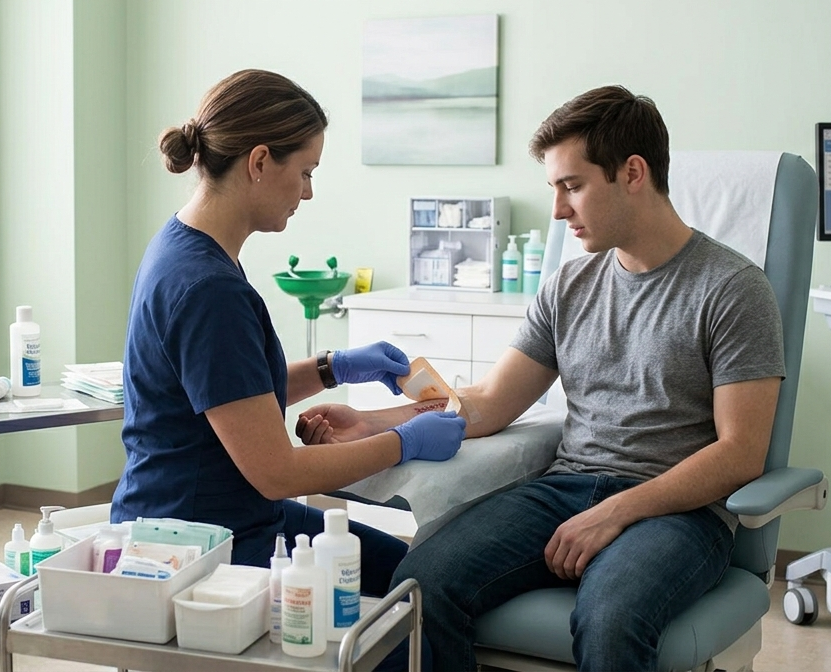
Whether resulting from trauma or surgical intervention—progress through four distinct physiological stages: hemostasis, inflammation, proliferation, and remodeling. The success of this transition is heavily dependent upon the quality and timing of the initial clinical management.
For optimal outcomes, most traumatic wounds require closure or approximation within a critical 6 to 12-hour window. This timeline is determined by a comprehensive assessment of the injury’s etiology, depth, anatomical location, and level of contamination, alongside the patient’s systemic medical history.
Our Precision Protocol Achieving restorative healing requires a sophisticated approach to wound care, including:
Debridement & Irrigation: Meticulous cleansing to manage macerated, or compromised tissue edges.
Surgical Excellence: Utilizing advanced techniques to ensure robust hemostasis, minimal skin tension, and precise border approximation.
Strategic Material Selection: Selecting specialized sutures and bio-interactive dressings tailored to the specific wound environment.
Without expert intervention, acute wounds are susceptible to complications such as dehiscence, infection, seromas, or tissue necrosis. These setbacks often result in delayed healing and the formation of hypertrophic scars, keloids, or contractures—pathologies that can significantly impair both physical function and patient self-esteem. At Halo Clinic, our goal is to intercept these risks early, ensuring a seamless recovery and a superior aesthetic result.
Instead of a "wait and see" approach, our strategy at Halo focuses on early clinical management to bypass the natural complications of the inflammatory and proliferative phases of wound healing. It bridges the gap between functional recovery and aesthetic excellence. It acknowledges that healing isn't just biological; by ensuring a "superior aesthetic result," the strategy addresses the patient's psychological well-being and self-esteem.